


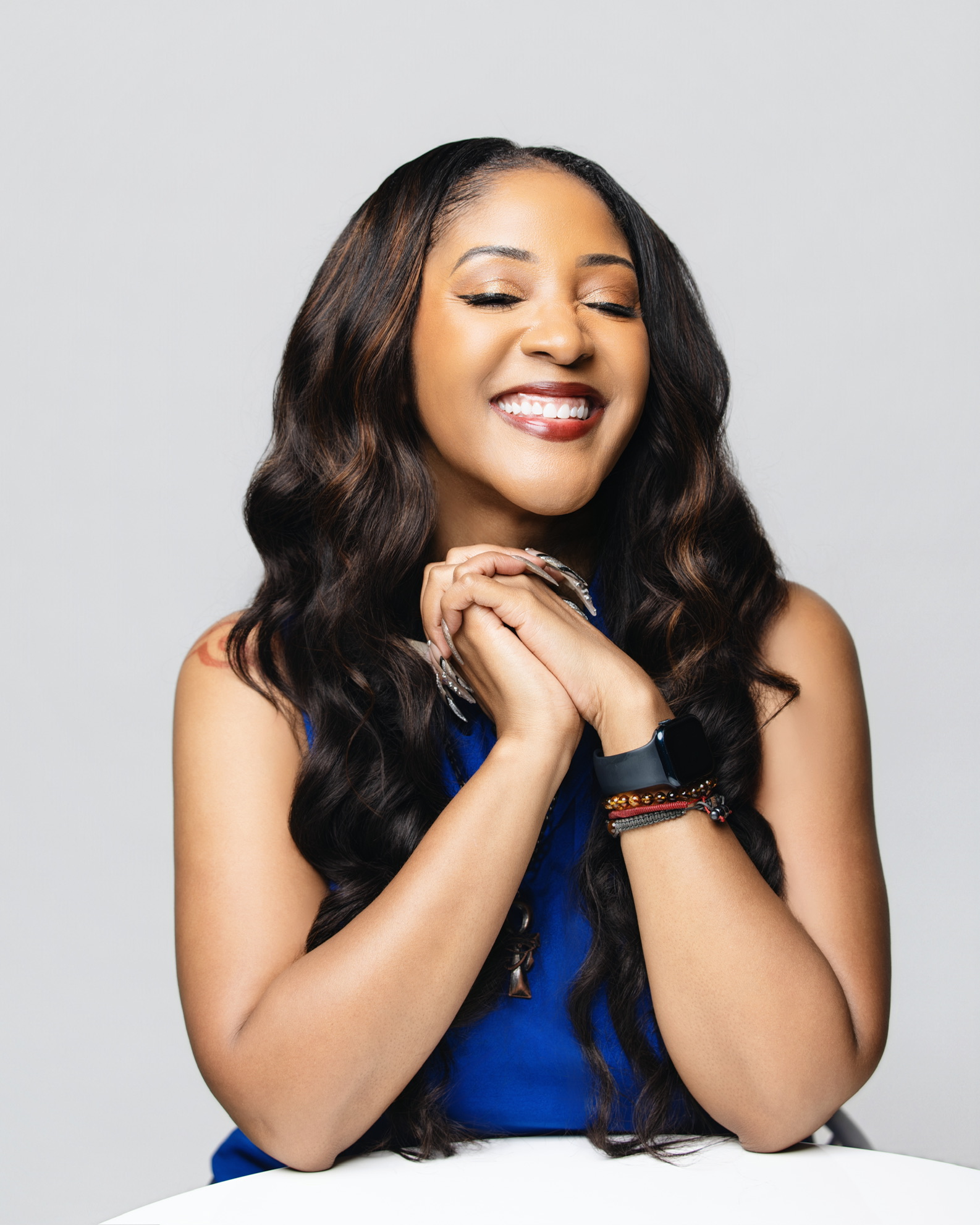
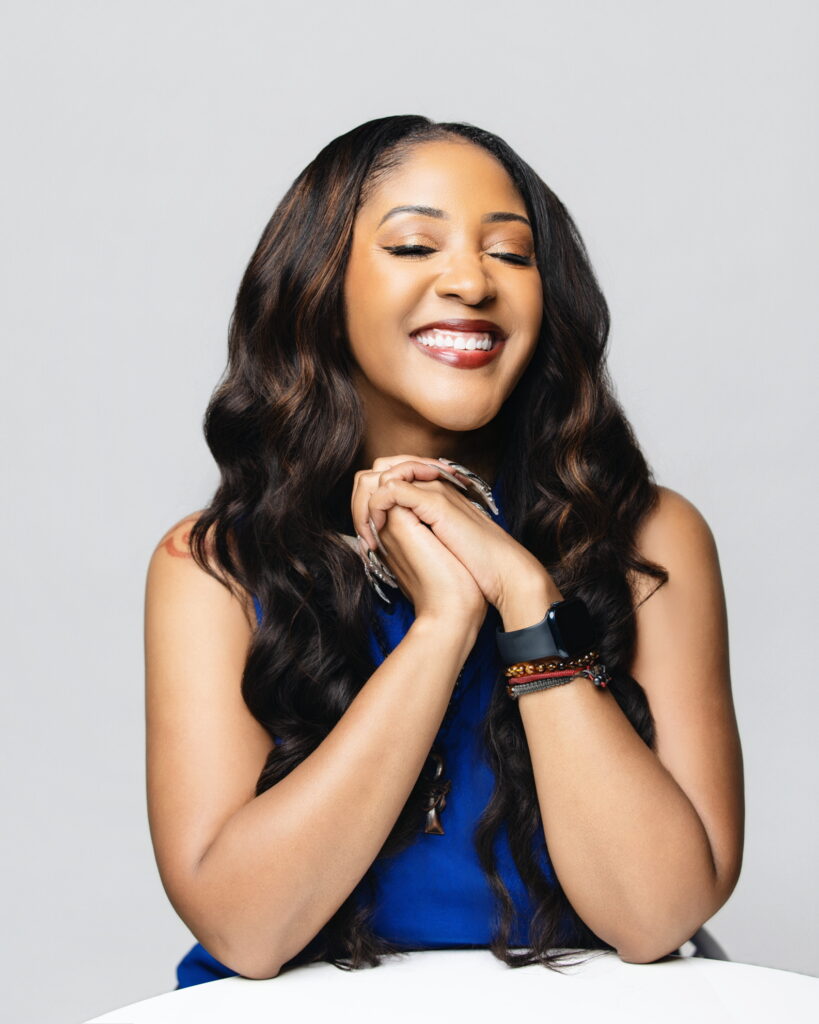
For photographer Marie Malvoisin, boudoir was never about giving women power. She does not believe that power was hers to give. After twenty years in the Army, a lifetime of resisting other people’s definitions, and seven years behind the camera, she built an artistic practice around something more complicated: creating enough safety for women to remember who they already are.
Marie Malvoisin wanted to be an artist long before she understood what kind of artist she might become. As a child, she could imagine scenes, compositions and visual ideas with remarkable clarity, but drawing them was another matter entirely. She still laughs when she remembers the sketchbook from those years. “My sketching was horrendous,” she says, smiling at the thought of it. The ideas were there. The ability to translate them onto paper was not.
Then, for her thirteenth birthday, her father gave her a Polaroid camera.
Photography became an on-again, off-again obsession. She began with landscapes and buildings, eventually turning toward people. Years later, while serving in the Army, she experimented with photojournalism and came close to changing career fields to public affairs. She ultimately decided against it when she realized the position might take her farther from the thing she actually wanted to do: hold the camera and tell the story herself.
By then, photography had begun satisfying several parts of her mind at once. It connected her love of history, art, the humanities and human behavior. She started studying photographs differently, paying attention not only to whether an image looked good, but to why it worked. She watched the eyes. She studied the composition. She asked what emotion the photograph was trying to evoke and whether every part of the frame was contributing to that emotion.
“My creativity and imagination became laser focused and sharp,” she says. “I was finally able to create art, and I was happy.”
Boudoir Wasn’t the Plan
When Malvoisin founded Bohemian Visions in 2019, she was still serving in the Army and preparing for retirement. The original plan was broad: portraits, engagement sessions, high school seniors, headshots and whatever else made sense for a general photography business. Boudoir was barely on the list.
“I wasn’t interested,” she says.
Her opinions about some of the other traditional photography categories remain characteristically direct. Weddings hold no appeal for her. Newborns are cute, but bodily fluids are a hard no. Traditional maternity photography often felt too predictable and too visually safe for the kind of work she wanted to make.
Boudoir arrived through two experiences that changed her perspective.
The first was a photography meetup built around a boudoir theme, although the styling leaned more toward pinup than nudity. A professional model posed for a room of roughly a dozen photographers, and Malvoisin was one of only a few women present. She began noticing something that had little to do with lighting or camera settings. Some of the male photographers were making the model visibly uncomfortable. The behavior was subtle at first, expressed through the way they looked at her, how certain cameras lingered and what they asked her to do.
Then one photographer began zooming in on the model’s crotch. Later, when she refused a request to get onto all fours on an unfinished floor, Malvoisin intervened.
The moment stayed with her long after the meetup ended. She began researching boudoir photography, trying to understand both the genre and the women who sought it out. One concern repeatedly surfaced in those searches: women wanting access to more female boudoir photographers.
The second turning point came through YouTube. While teaching herself everything she could about becoming a professional photographer, Malvoisin discovered Los Angeles boudoir photographer Michael Sasser. She spent an entire weekend watching his videos, particularly the ones in which he talked about why women invested in boudoir photography. They wanted to feel beautiful. Feminine. Powerful. They wanted an experience that allowed them to see themselves differently.
Something about that explanation finally made the genre make sense to her.
“I credit him,” Malvoisin says. She eventually met Sasser in 2022 and thanked him for the influence he had on her work. But her own connection to boudoir would quickly become more personal and philosophical. “I remember the feeling of claiming my own power and strength,” she says. “I’ve always had a sex-positive attitude. I’ve always believed in embracing imperfections and flaws. Being able to help women embrace their sensuality through boudoir, something clicked for me.”
Seven years later, when she steps into the studio with a client, she describes the feeling simply: “I’m in the zone.”
Boudoir, she says now, found her.
She Does Not Empower Women
There is a phrase Malvoisin heard constantly when she became certified as a boudoir photographer: We empower women.
She rejected it almost immediately.
“I completely disagreed with it,” she says. To Malvoisin, the language carries an implication she finds fundamentally wrong. If the photographer is empowering the client, then the photographer must somehow possess the power in the first place and be in a position to bestow it. That is not how she understands the relationship.
Her clients arrive with agency. They arrive with autonomy. They arrive with their own histories, desires, boundaries and identities. Her role is not to hand any of that back to them. Her responsibility is to create the conditions in which they can exercise it freely.
That distinction is inseparable from the way Malvoisin thinks about objectification. “Objectification is stripping a woman of her humanity,” she says. “She is no longer a person with agency and autonomy. Her purpose becomes satisfying the sexual desire of another person. That’s dehumanizing.”
For Malvoisin, sensuality is not the problem. Sexuality is not the problem. Nudity is not inherently the problem. The problem begins when humanity disappears and the subject becomes an object rather than a participant.
Inside Bohemian Visions, she organizes the experience around four ideas: privacy, consent, safety and freedom. She works with an all-female hair and makeup team. She moves at the client’s pace. Before she physically adjusts someone’s body or pose, she asks permission to touch her. Every time. “Consent is non-negotiable,” she says.
Those boundaries are not designed to make the experience clinical. They are what allow the client to relax. Malvoisin wants her clients to know that they remain in control even while she is directing the session. “I’ve got her back,” she says.
Usually, somewhere between fifteen and thirty minutes into a shoot, something changes. Malvoisin shows the client a few photographs on the back of the camera and watches her face. The nervousness begins to dissolve. The eyes change. Then comes one of her favorite reactions.
“That’s me? I’m so pretty.”
Malvoisin smiles every time she repeats it.
“It never gets old.”
The Woman Inside the Uniform
Malvoisin’s fierce relationship with autonomy began long before she ever picked up a professional camera. “Since I was a child, everyone has tried to put me in a box and assign labels I did not consent to,” she says.
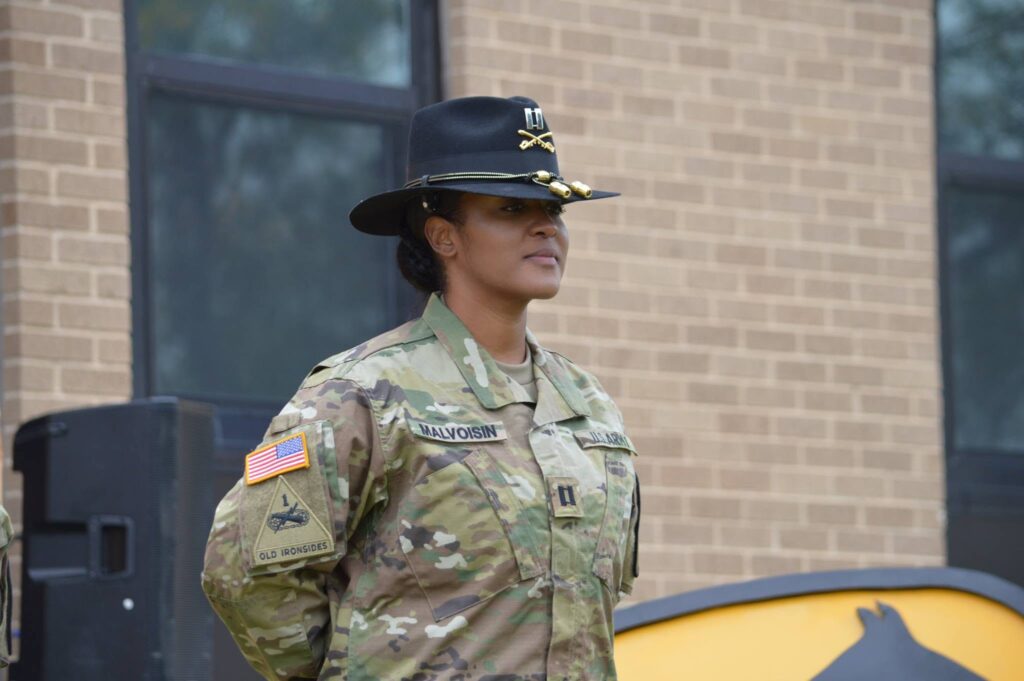
At 17, she joined the Army. When people ask why, she often gives the shortened version: she needed to get out of her mother’s house. The more complete answer is that she felt as though she could not breathe. She wanted to escape a cage. On her first night at basic training in July 1999, she cried herself to sleep and realized she had traded one highly controlled environment for another.
“I remember thinking, I left one cage for another.”
She would remain in the Army for twenty years.
The contradiction is not lost on her. Malvoisin describes herself as rebellious, fiercely protective of her autonomy and deeply resistant to being defined by other people. She also spent two decades inside one of the most hierarchical and regulated institutions in American life.
Her experience of being a woman inside that institution was complicated and often brutal. “The Army is deeply, deeply misogynistic,” she says. She remembers being told directly that women did not belong there. Sexual harassment was routine enough that vigilance became part of daily survival. During deployment, she carried multiple knives because she feared being raped and wanted, if the worst happened, to leave unmistakable physical evidence that she had fought back.
That degree of vigilance shaped how she understood femininity. She learned quickly that being perceived as too feminine could undermine the respect she was already fighting to earn. “You were never going to be taken seriously,” she says. “You had to be one of the guys.”
She remembers being told she was “pretty to be in the Army.” She was sometimes mistaken for a military spouse rather than the soldier. Vulnerability was treated as weakness. She eventually developed what she now recognizes as internalized misogyny, absorbing some of the same attitudes she was navigating.
“You could look like a woman,” she says, “but you couldn’t act like one.”
The solution was compartmentalization. There was the public-facing officer, capable of functioning inside the Army’s expectations, and there was the private woman underneath. Malvoisin knew who she was, but she did not always feel free to inhabit that identity publicly. Over time, that split became emotionally expensive. She describes losing pieces of herself and becoming increasingly anxious and depressed.
Years later, she would build the opposite environment.
The Studio as Sanctuary
“In the Army, vulnerability was treated like severe weakness,” Malvoisin says. “At Bohemian Visions, vulnerability is strength.”
She is careful not to equate vulnerability automatically with trauma. Vulnerability can mean honesty. Connection. Openness. It can be the freedom to stop performing long enough to recognize what is actually true.
“In a male-dominated profession, I wasn’t given the safety or the space to metaphorically strip down and just be Marie,” she says. “That resulted in me losing my sense of self and being put into a box that wasn’t me.”
Bohemian Visions was built in conscious opposition to that experience. It became a place where a woman could be physically exposed without surrendering control and emotionally open without having that openness treated as weakness. Malvoisin describes it as a place where someone like Captain Malvoisin could finally strip away the expectations and rediscover the person underneath them.
“Not be empowered,” she says. “Be reminded of who the fuck she is.”
The physical studio reinforces that philosophy. Malvoisin describes its aesthetic as Southern Gothic. The building dates to 1900 and originally functioned as a storefront, with the kind of upstairs residential space common to commercial buildings of that era. Her visual references came from everywhere: movies, books, hotels, restaurants, music videos, historic interiors and years of accumulated imagery.
When she researched other boudoir studios, she noticed a sameness. The rooms, the color palettes, the bathtubs, the styling all began to blend together. Malvoisin’s instinct was immediate and familiar: go in the opposite direction.
The copper bathtub that eventually became one of the studio’s signatures was partly a happy accident after a disastrous purchase involving a $900 plastic tub. From there, the space evolved into something closer to an imagined luxury apartment than a conventional photography studio.
Malvoisin even invented a fictional owner for it. In her mind, the apartment belongs to someone whose primary residence is in the countryside, who travels frequently and keeps this city residence as a private haven after long days at the office. The rooms contain objects collected during those imagined travels. History is present, but it has been filtered through fantasy, romance and a little theatricality.
“It is an escape from the demands of life,” she says.
The studio, in other words, is not merely a backdrop.
It is a supporting character.
Making Women Into Art
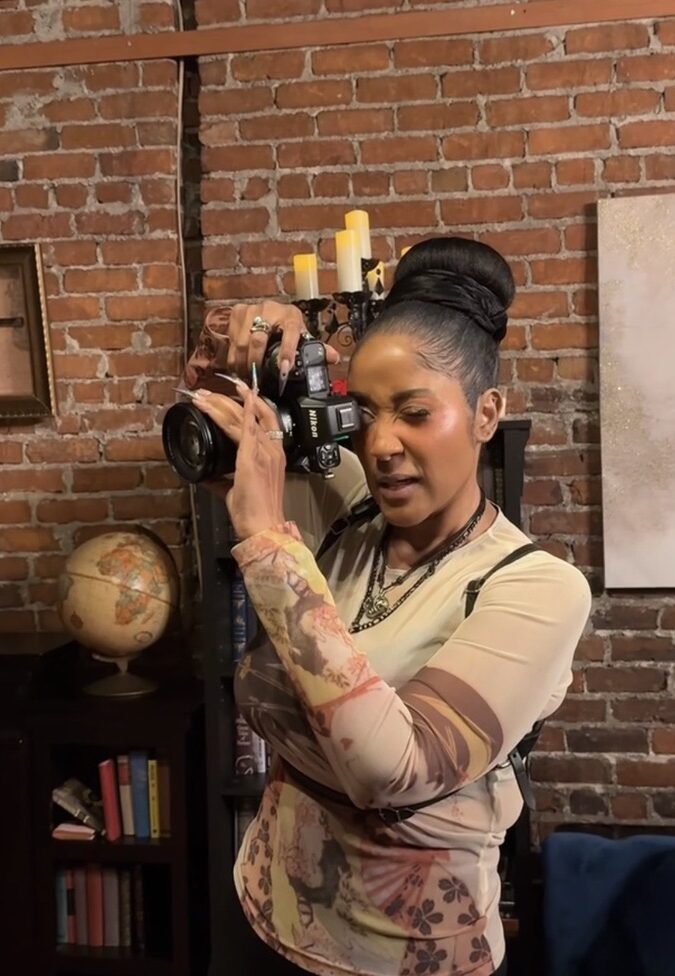
Malvoisin studies painters. She visits museums and buys books about classical artists to analyze composition. She watches dancers to understand how bodies move through space and practices posing on herself so she understands what a position actually feels like before asking a client to hold it.
She is especially obsessive about lighting. “I am extremely particular about it,” she says. “I’m constantly studying my work.”
That commitment to practical image-making has become even more important to her as artificial intelligence increasingly reshapes visual culture. Malvoisin’s photography depends heavily on what exists physically in front of the lens: practical lighting, real environments, intentional posing, carefully constructed sets and actual human expression. She does not want post-production to manufacture the soul of the photograph.
“I see the photograph in my head before I take it,” she says. When the frame on the back of the camera matches the image she had already imagined, she gets visibly excited.
The process, however, is not rigid. Malvoisin estimates that it is roughly fifty-fifty. Half of the image comes from the vision she brings into the studio. The other half comes from the person standing in front of her and whatever she is feeling in that moment. The session becomes collaboration rather than execution.
“I want to tell the client’s story,” she says. “I want to transform them into art they can hang on their wall.”
When asked what makes a photograph recognizably hers, Malvoisin points to the details, the lighting, the artistry and, perhaps most importantly, the eyes. When asked what makes it recognizably Bohemian Visions, her answer is even simpler.
“The emotion.”
What Women Believe About Themselves
After seven years of photographing women, Malvoisin has reached a difficult conclusion about the way women are taught to see themselves.
“Women are surviving in a society that’s been tearing them apart since they left the womb,” she says.
The standards change constantly, but the message remains remarkably consistent. Too old. Too large. Too thin. Too dark. Too visible. Too sexual. Not sexual enough. Too masculine. Too feminine. For women over 40, the cultural message often becomes even harsher: desirability supposedly has an expiration date.
Malvoisin hears variations of the same fears repeatedly. Women tell her they are not photogenic. They tell her they are not pretty. They identify every perceived flaw before the camera has even been raised.
Then the back of the camera contradicts them.
“That’s me. I’m so pretty.”
Those moments matter to Malvoisin precisely because she refuses to exaggerate what a photoshoot can accomplish. She is deeply skeptical of the boudoir industry’s tendency to monetize trauma or promise emotional outcomes no photographer can guarantee.
“I think capitalizing on trauma is tacky,” she says.
A boudoir session cannot responsibly promise to undo decades of insecurity or traumatic experience. It cannot substitute for therapy. It cannot erase grief, heal every wound or permanently repair someone’s relationship with her body.
It can, however, provide evidence.
You were afraid to do this. You did it anyway. You saw yourself differently afterward. Perhaps that evidence becomes useful the next time something else frightens you, whether that is starting a business, applying for a promotion or making a decision you have been postponing.
The photograph did not heal your entire life.
But it may have reminded you that fear does not automatically mean stop.
The Session That Changed Everything
For Malvoisin, the moment she fully understood the depth of this work came while photographing a widow.
The woman was preparing to close a chapter of her life and wanted to create photographs involving her husband’s remains. Her intake form stayed with Malvoisin. “When he died, a part of her died too,” she recalls. “He was her soulmate.”
The session was her goodbye.
Malvoisin does not romanticize what the camera could accomplish. Photography could not reverse grief or restore what had been lost. It could not make mourning disappear. What it could do was hold a moment in which love, grief, memory and farewell occupied the same space.
For the widow, the session marked the closing of one chapter. For Malvoisin, it clarified the nature of the work she had chosen.
The photographs she creates are often described in the language of transformation, but she increasingly thinks of them as something closer to historical evidence. A piece of time is captured and preserved, whether that moment represents clarity, self-discovery, grief, sensuality, joy, confidence or transition.
“The art is a piece frozen in time,” she says.
That session made the calling undeniable.
Becoming Marie Again
Retirement from the Army did not produce the identity crisis people sometimes expect from a long military career. Malvoisin had already mentally left years earlier and was ready for the next chapter.
There was no elaborate ending. She did not have a retirement ceremony. There was no farewell. No meaningful final award. Not even a final handshake. She simply left.
“I quietly rode off into the sunset,” she says with a laugh.
Years earlier, she had made herself a promise. When the Army chapter ended, she would not spend the rest of her life orbiting military installations trying to recreate it. In the six years since retirement, she has returned to a base only twice.
“Captain Malvoisin is gone,” she says. “Marie is in the driver’s seat permanently.”
The change became visible almost immediately. Eleven piercings. Long nails with intricate designs. Blonde highlights. Clothing chosen because she liked it, rather than because someone with more rank had an interpretation of what counted as sufficiently professional. She describes the period as a kind of rebirth.
Reclamation may be the more accurate word.
Malvoisin had always known who she was. Retirement allowed her to stop negotiating whether that woman was permitted to exist publicly.
Today she says her feminine energy has become dominant, not because she has become less ambitious or less formidable, but because her environment is finally safe enough that she no longer needs to exist in a constant state of defense. She describes herself as mentally, emotionally and physically safe, and she sees the consequences of that safety throughout her life. Her creativity flows more easily. Her anger and anxiety have decreased. She describes herself as a better partner in romantic relationships and a more present mother. Her relationship with her son is close, open and conversational.
“I am not living in an activated nervous system anymore,” she says.
She has also become less interested in permanence as an artistic virtue. Malvoisin does not want to be known for making the same photograph for the next twenty years. She points to artists such as Madonna and Beyoncé, women whose careers have been built in part on refusing static definitions.
“I refuse to be put into a box,” Malvoisin says. “My work is going to change because I’m going to change. My art is alive.”
The Rolls-Royce of Boudoir
Malvoisin is equally unapologetic about the business model she built around the work.
Bohemian Visions is intentionally luxury. To her, luxury has less to do with conspicuous consumption than with attention, scarcity, curation and service. She accepts a limited number of clients each month because she does not want the experience to become mass produced. Once clients begin feeling like numbers moving through an assembly line, she believes the luxury has disappeared regardless of how expensive the products may be.
During a mastermind, someone once asked whether she wanted her business to become the Porsche or the Nissan of the boudoir industry.
Malvoisin rejected both options.
“I want to be the Rolls-Royce of boudoir.”
The philosophy extends to what clients take home. Malvoisin strongly believes meaningful photographs deserve a physical life. They should be printed, framed, bound, displayed and lived with rather than disappearing into thousands of digital images that are rarely seen again.
“Art is meant to be appreciated,” she says, “not hidden in thousands of photos.”
For Malvoisin, this is especially true when the subject of that art is the client herself. A photograph created during an emotionally significant period of someone’s life deserves more permanence than a swipe past it on a phone.
Not Someday
At 45, Malvoisin sees womanhood differently than she did when she entered the Army at 17. Perfection interests her less. Agency interests her more. She has spent enough of her life watching institutions, social expectations and other people attempt to define what women should look like, how they should behave and when certain parts of their lives should supposedly expire.
“You don’t need to be perfect,” she says. “Give yourself grace. Live for yourself. Not someday. Today.”
The philosophy is not new. Malvoisin has carried a personal creed with her since she was 20 years old, long before Bohemian Visions existed and long before she knew photography would become her life’s work.
Do you. Be you. Love you.
Three short sentences have followed her through adulthood, but their meaning has deepened with time. Do you is the refusal to build a life according to someone else’s script. Be you is the harder work of knowing yourself well enough to recognize when the world is trying to hand you an identity that does not belong to you. Love you is the acceptance that makes the first two sustainable, not an abstract declaration of perfection, but the decision to extend yourself enough grace to live honestly while you are still becoming.
In many ways, Bohemian Visions is simply that philosophy made physical.
It is difficult not to see the thirteen-year-old with the Polaroid somewhere inside it. The girl who knew what she wanted to create before she had found the medium. The seventeen-year-old trying to escape one cage and discovering another. The officer who learned to divide herself into public and private versions. The veteran who quietly walked away without ceremony. The woman who later pierced her body, painted her nails, changed her hair, built a dark Southern Gothic studio and filled it with everything she had once been taught femininity was not allowed to contain: softness and power, sexuality and leadership, vulnerability and control, beauty and rebellion.
Malvoisin does not want her clients to leave Bohemian Visions believing they have become someone new. That would contradict almost everything she believes about power. She wants them to recognize the woman who was already there.
Years later, when a client looks at the photograph hanging on her wall, Malvoisin hopes she remembers exactly who she was in that moment. Not defined by an institution, a partner, age, beauty standards, motherhood, career, trauma, trends or whatever label someone else decided to assign her.
“The woman she was meant to be,” Malvoisin says, “captured during a moment in history she can be proud of, or look back on and reflect.”
For a photographer who has spent much of her life resisting other people’s boxes, perhaps that was always going to become the work: not giving women power, but creating enough space for them to recognize their own.
Do you. Be you. Love you.
